
Clear sound helps every person in a congregation hear the message, follow the music and take part without distraction. A successful church sound system must do more than produce enough volume. It needs to deliver intelligible speech, balanced music and consistent coverage across a room that may have difficult acoustics, changing attendance and a volunteer technical team.

Surgesound supplies professional loudspeakers, amplification, microphones, cabling and measurement solutions across South Africa. We help churches and AV professionals select compatible equipment suited to the building, worship style, budget and operating team.
Technical support, product training and an in-house service centre help protect the system after commissioning.
Planning a new system or upgrading an existing one? Talk to Surgesound about your church sound requirements.
A church is rarely an acoustically simple room. Traditional sanctuaries can have high ceilings, long reverberation times and hard reflective surfaces. Contemporary worship auditoriums introduce different demands: high stage volume, multiple vocalists, amplified instruments, monitor mixes and online broadcasts. The system may need to move from a quiet spoken message to a full band without losing clarity.
A professional church AV system should be planned around the room and its use before equipment is selected. There is no universal church speaker package that is correct for every building.
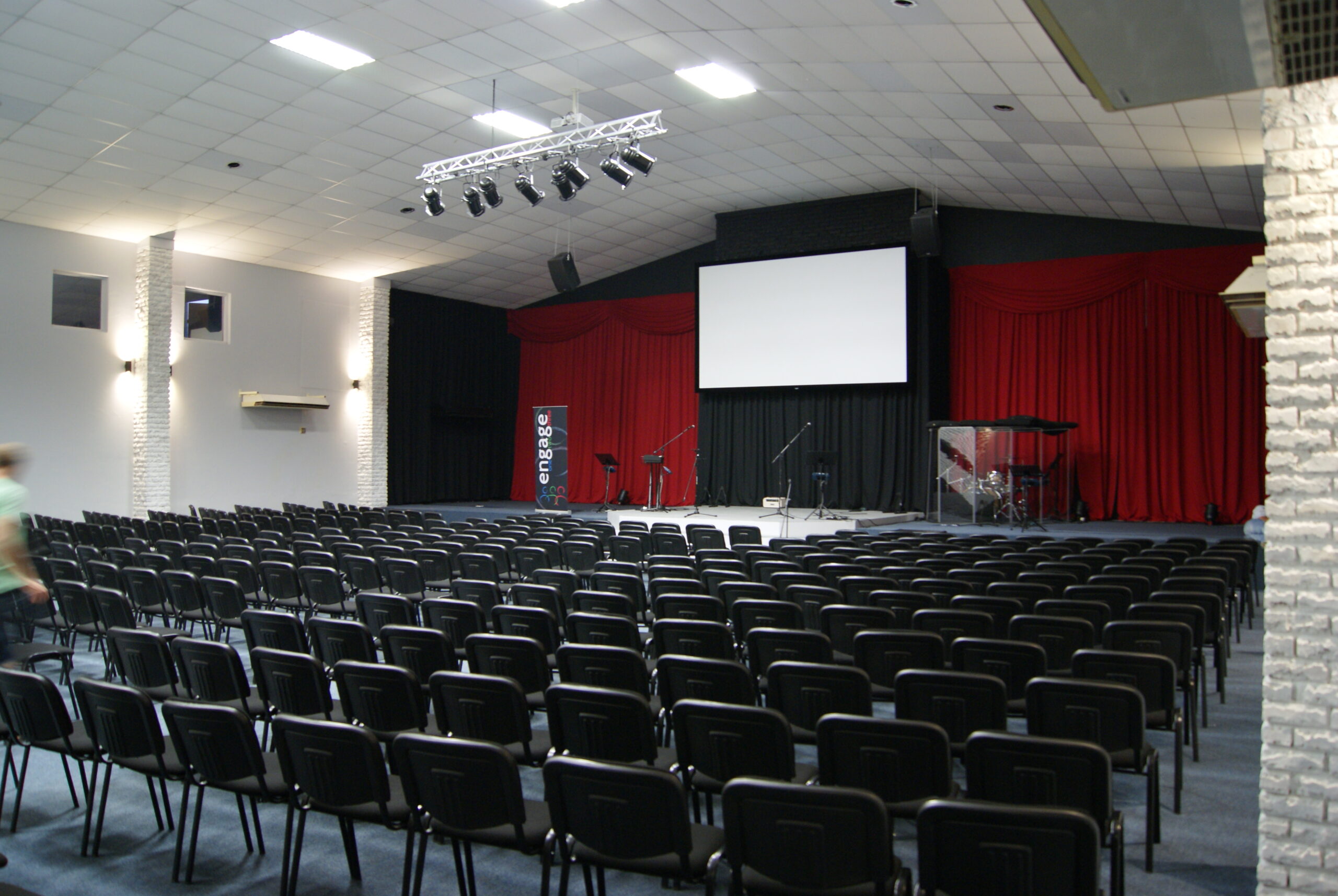
High ceilings, long reverberation times and hard reflective surfaces make speech intelligibility and controlled coverage the priority.
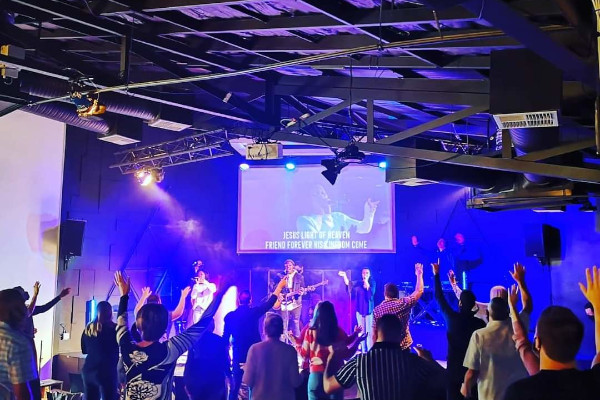
High stage volume, multiple vocalists, amplified instruments, monitor mixes and online broadcasts introduce different demands on the same system.
The right solution may be a discreet column system, a controlled point-source design, a distributed arrangement with timed fills or a higher-output system for a large auditorium.
Many problems blamed on the mixing console or microphones actually begin with room acoustics, loudspeaker coverage or system architecture.
The solution is not automatically more equipment.
Better results may come from changing coverage, repositioning loudspeakers, controlling microphone pickup, improving signal routing, adding appropriate acoustic treatment or retaining serviceable equipment within a carefully planned upgrade.
The final design depends on the space, but a complete house of worship AV system may include the following elements.
Selected for the required output, throw and coverage pattern.
Distributed loudspeakers for areas the main system cannot reach evenly.
Where contemporary worship or programme content needs controlled low-frequency extension.
For pastors, worship leaders, vocalists, choirs and instruments.
Enough inputs, outputs, routing and scene control for current and future needs.
Designed to help performers hear clearly without overwhelming the room.
Separate feeds for broadcast, overflow rooms and assisted-listening systems where required.
Suited to the installation environment.
Labelling and documentation that make the system maintainable.
Tools used by trained technicians to verify coverage, timing and tonal balance.
For the people responsible for operating the system.
Surgesound’s system design support helps installers and integrators compare products, interpret technical data and match loudspeakers, amplification, processing and infrastructure to the project brief.
The same brand of loudspeaker is not the right answer for every room. These four application types describe how requirements change with the building and the worship programme.
Speech intelligibility and architectural sensitivity are often the priorities. Controlled-dispersion or adaptive column loudspeakers can direct more energy towards listeners and less towards reflective surfaces. Discreet mounting and carefully planned cable routes may be as important as output.
A full band requires greater dynamic range, low-frequency capacity and stage control. The system may need high-output mains, subwoofers, monitoring and flexible routing for front-of-house, recording and broadcast. Making the front rows louder does not solve a poorly covered rear seating area.
Smaller venues need clarity and ease of operation, not a scaled-down touring rig. Compact loudspeakers, appropriately sized amplification and straightforward control can provide a reliable, expandable result.
Large or multi-building sites may require audio zones, networked signal transport, delay systems and consistent standards. The design should allow new rooms or campuses to connect without replacing core infrastructure.
A church sound system often serves more than the seats facing the stage. The project brief should identify what each area needs to hear and whether it requires independent volume or source control.
Even speech and music coverage planned around the seating and room acoustics.
Suitable microphones, monitoring and cabling without avoidable feedback or stage noise.
Delayed fills where the main system cannot provide direct coverage.
A dedicated routing path designed for online listeners.
Equipment and connections selected for exposure, coverage and safe operation.
Independent or linked sound appropriate to each room's use.
Clear programme sound with suitable local level control.

Not every church requires every zone. Defining the real operational need prevents unnecessary spending and ensures that the infrastructure supports the spaces that matter.
Explore professional products selected for houses of worship.
Surgesound represents product ranges that allow a church system to be built around the application instead of forcing every project into one package.


High-output point-source performance with a choice of coverage patterns for medium-to-large cathedrals, auditoriums and contemporary worship venues.
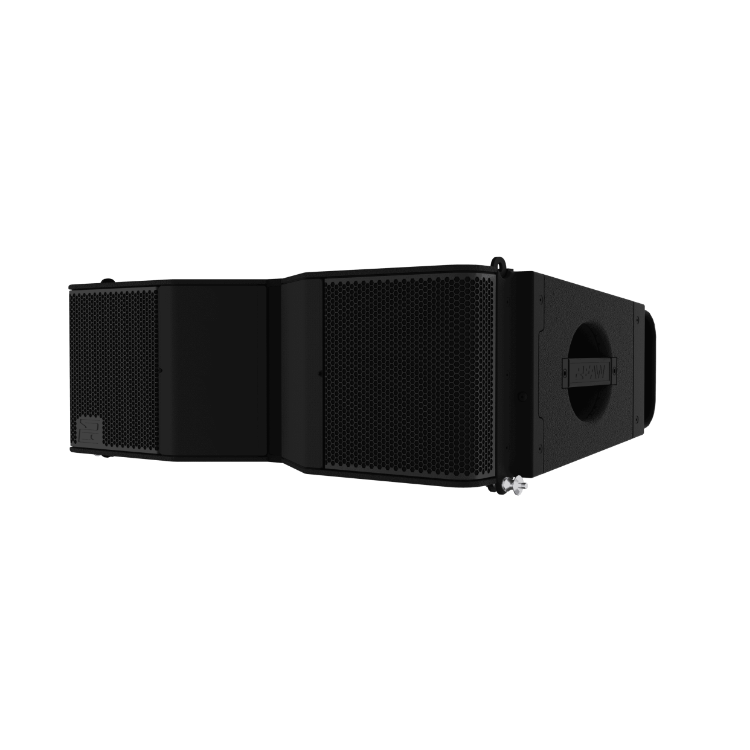
A dual 8-inch active line array and the largest two-way module in EAW’s Newport Series. Designed for houses of worship and performing arts venues wherever the reach and level of a bigger array are needed from a lighter, self-powered package.

Compact loudspeaker offering wide conical coverage and flexible mounting for foyers, parents’ rooms, meeting areas and selected fill applications.

Self-powered stage monitor with onboard processing and Dante networking. Selection and placement must be coordinated with microphone pickup and stage-volume goals.

Professional dynamic microphone with a supercardioid pickup pattern. Its focused pickup and off-axis rejection can help vocalists achieve clarity on active stages when microphone technique, monitor placement and system gain are correctly managed.

Compatible M80 wireless capsules are available for selected transmitter platforms.

The EAW UXA4403 installation amplifiers combine Class-D amplification, onboard DSP and preloaded EAW Greybox loudspeaker settings. Their different power and channel configurations allow the amplifier to be matched to the selected EAW loudspeakers, room size and required number of outputs.
Reliable infrastructure is as important as the visible equipment.
Microphone cable designed for analogue microphone signals in environments affected by electromagnetic or radio-frequency interference.
Measurement software supplied for commissioning and diagnosis of installed systems.
Measurement microphone used alongside measurement software during commissioning and diagnosis.
These are professional tools for trained technicians. They are not substitutes for correct system design or acoustic judgement.
Surgesound supports worship sound system installation projects by helping dealers, consultants and integrators specify compatible products, compare suitable options and obtain professional equipment from supported brands. Installation, rigging, electrical work and project implementation should be completed by appropriately qualified professionals responsible for the site.
This process also makes staged upgrades possible. Serviceable equipment can be retained where it fits the new design, while the most limiting parts of the system are addressed first.
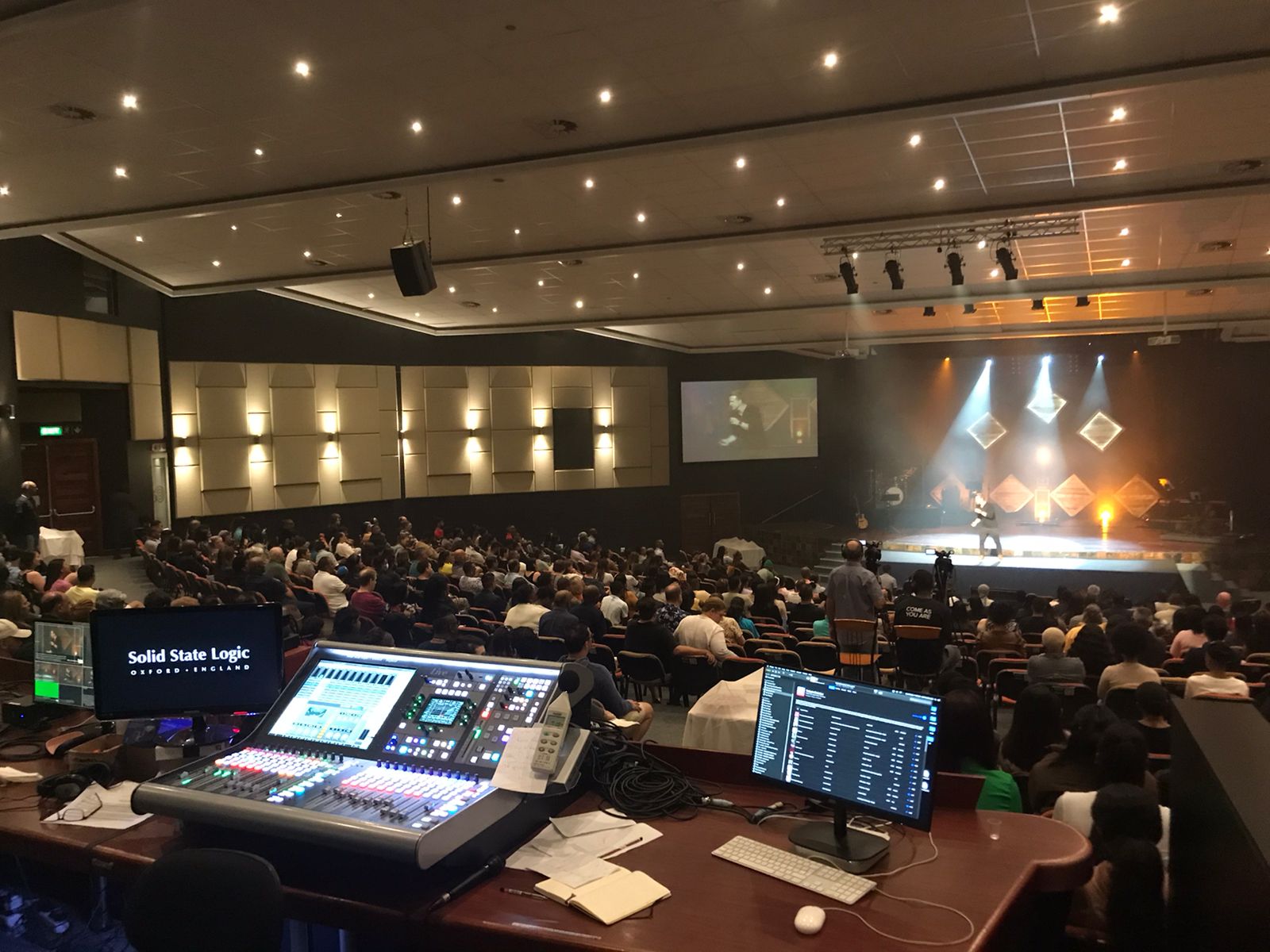

Even a well-designed system will produce inconsistent results if operators do not understand it. Surgesound provides product and audio-visual training covering the brands it represents, system integration, technical operation, troubleshooting and software control.
Training for a church team should be matched to its responsibilities. Useful topics can include:
Clear labels, documented signal flow and sensible permissions also help new volunteers become competent without exposing critical settings unnecessarily.
Surgesound distributes professional AV products to installers, integrators, dealers and specifiers across South Africa and the broader African continent.
Surgesound is based in Midrand, Johannesburg, with key product lines held locally.
Professional AV products are distributed to installers, integrators, dealers and specifiers across South Africa.
Distribution extends to the broader African continent, supported by application guidance, manufacturer relationships and after-sales assistance.
For projects outside Gauteng or South Africa, contact the team with the site, system and delivery requirements. Surgesound can confirm product availability, distribution coverage and the most appropriate support route for the project.
Whether you are correcting poor speech clarity, planning a new worship space, adding audio zones or upgrading a contemporary worship system, begin with the room and the real operational requirement. Contact Surgesound to discuss your church, current equipment, installation partner, budget and future plans. The team can help you identify suitable professional products and technical support for a system that is clear, reliable and practical to operate.
Common questions from churches, consultants and installers planning a church sound system.
The best church sound system is the one designed for the church’s room, seating, acoustics, worship style and operating team. A speech-led chapel may benefit from discreet controlled-dispersion loudspeakers, while a large contemporary auditorium may require high-output mains, subwoofers, stage monitoring and separate broadcast routing. A site-specific design is more reliable than purchasing a generic package by congregation size alone.
The cost depends on room size, acoustic complexity, required output, microphone and input count, number of zones, infrastructure, installation work and equipment that can be retained. A useful budget should account for design, products, rigging, cabling, commissioning and training, not only the visible loudspeakers. Surgesound can assist an installer or integrator with product selection and pricing once the system brief is defined.
A professional church PA system installation can include room assessment, system design, loudspeakers, amplification, processing, microphones, mixing, monitoring, cabling, racks, rigging, testing, alignment, documentation and operator training. The exact scope should be agreed with the project’s installer or integrator. Surgesound supplies supported products and technical product guidance for these projects.
Improving speech clarity usually requires better direct sound at the listener and less competing noise or reverberation. Depending on the room, that can involve controlled loudspeaker coverage, correctly timed fills, improved microphone placement, reduced open-microphone count, acoustic treatment and proper system alignment. Equalisation alone cannot correct every acoustic or coverage problem.
Loudspeakers with appropriate pattern control can help keep more sound on the congregation and less on reflective walls and ceilings. Adaptive columns such as the EAW AC6 or controlled point-source systems such as the EAW QX500 Series may be evaluated, depending on room geometry, required output and musical programme. Modelling and site assessment should determine the final choice.
Yes. A staged upgrade can retain serviceable equipment while addressing the most limiting issues first. The existing loudspeakers, amplification, console, microphones, cabling and network infrastructure should be assessed for condition, compatibility and suitability within the new design. The upgrade plan should prevent early purchases from blocking later stages.
Only when the main loudspeakers cannot provide sufficient direct coverage to those seats. Correctly placed and delayed fill loudspeakers can improve clarity at a lower local level, but incorrect timing or overlap may make intelligibility worse. Coverage modelling and commissioning measurements should guide the decision.
Yes, if the mixing, routing and network infrastructure provide suitable outputs. A livestream normally benefits from its own mix because online listeners do not hear the acoustic sound present in the sanctuary. Overflow rooms may also need independent level control, delay or source selection depending on their use.
Surgesound supplies professional AV equipment and provides product specification support, training and after-sales service. Installation and project implementation are handled by your installer or integrator. Contact our team to discuss your church’s requirements and how we can support your project.